
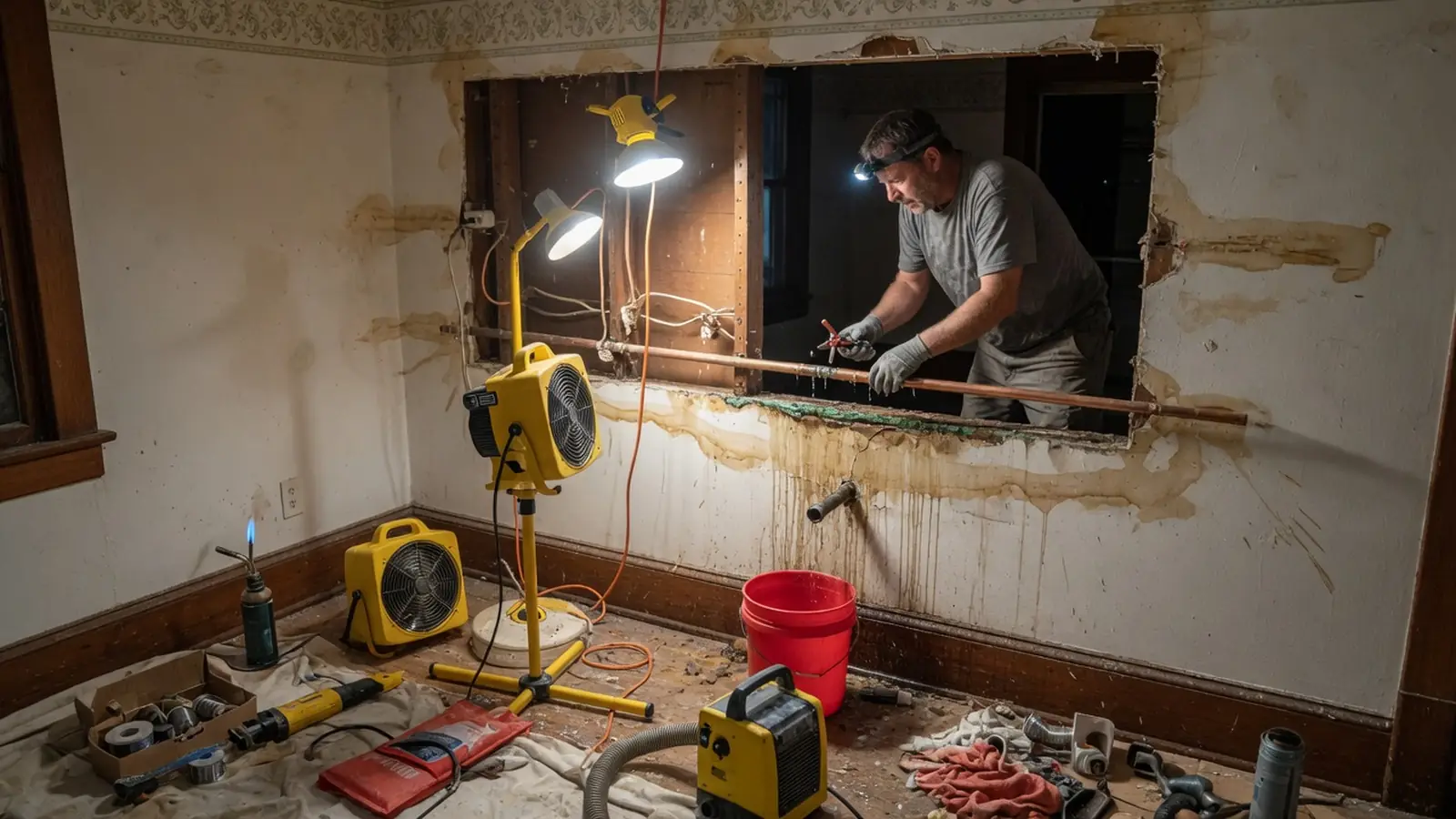
Pasadena Storm Damage
When extreme storms hit our Gulf Coast region, standard drywall wicks standing water vertically at a rate of three inches per hour, rapidly spreading moisture into wall cavities. Our emergency response crews deploy commercial extraction pumps and structural drying equipment to stabilize saturated living spaces before framing weakens. We eliminate standing water quickly and protect your home against long-term property destruction.
Call (713) 555-0129 if water is still in the house.
Prefer to talk? (713) 555-0129
Proven Storm Recovery Across Harris County
Following severe downpours, a severe storm caused heavy water intrusion through the roof, saturating ceiling drywall and hardwood flooring, with the homeowner seeking guidance on emergency mitigation and claim coverage.
Heavy rain causes dry, clay-heavy soil to expand rapidly, generating hydrostatic pressure that forces exterior groundwater through foundation walls.
When storm surges threaten residential foundations, homeowners count on our team to schedule complete residential water damage restoration services to stabilize framing and prevent secondary rot.
Homeowners often describe how making horizontal flood cuts to remove water-damaged drywall after indoor flooding uncovers hidden black mold across framing and insulation.
After persistent dampness and water intrusion in a residential unit, residents seek advice on navigating third-party mold inspections versus remediation companies to address moisture and health symptoms.
After a localized indoor flood was mopped up, removing the baseboards revealed dark mold growth spreading up the bottom of the drywall, proving that simple surface wiping leaves moisture trapped inside wall cavities.
Our field technicians deploy thermal moisture meters and continuous commercial air movers to guarantee structural framing dries thoroughly before reconstruction begins.
Our Step-by-Step Storm Recovery Process
A pattern echoed in public discussions is how homeowners discover extensive standing water and fungal growth in substructures following severe rainstorms, which is why property owners choose to rely on our emergency flood cleanup and extraction crew to remove water before structural timbers soften.
- Rapid Assessment And Ingress Sealing. Technicians immediately evaluate roof and window breaches using thermal sensors, securing vulnerable exterior openings to prevent continuous rainwater influx.
- High-Volume Floodwater Extraction. Crews position industrial submersible pumps and truck-mounted vacuum units to eliminate standing floodwaters from ground floors and low-lying living areas.
- Controlled Removal And Antimicrobial Wash. Category 3 blackwater from ground flooding or sewage backups requires EPA-registered disinfectants and antimicrobial sanitization, not simple drying, so technicians thoroughly decontaminate all exposed framing studs and floor plates.
- Structural Dehumidification And Monitoring. Industrial low-grain refrigerant dehumidifiers and axial air movers operate continuously while our technicians log daily psychrometric readings to verify framing equilibrium.
Our Scientific Structural Drying Standard
Homeowners often describe noticing floor hot spots or sudden water intrusion and questioning whether to call a plumber or restoration specialists before filing an insurance claim. Because insurers deny gradual water damage claims, requiring timestamped pre-demolition photos and daily psychrometric moisture logs for coverage approval, our technicians log precise atmospheric readings and drying progress each day. When lingering moisture triggers fungal outbreaks inside framing cavities, property owners trust our partners to provide certified mold remediation and moisture inspection to return indoor air to healthy levels. We stand firmly behind our thorough drying standards to protect your property investment.
Storm Water Extraction
High-capacity extraction equipment removes standing floodwater from soaked living areas within hours. We clear pooled runoff rapidly to prevent prolonged water exposure to subflooring and framing.
Hail Impact And Ceiling Drying
Hail activity around this coastal region is uneven year to year: 2024 logged 604 radar signatures while 2022 logged only 121, a 5.0x spread. We deploy rapid extraction gear to resolve ceiling leaks and attic pooling before water penetrates living quarters.
Contaminated Water Sanitization
Ground floodwaters and sewer lines introduce severe microbial hazards into living areas. Because Category 3 blackwater from ground flooding or sewage backups requires EPA-registered disinfectants and antimicrobial sanitization, not simple drying, we deliver complete structural decontamination.
Our Commitment To Emergency Storm Recovery
We adhere to scientific psychrometric drying principles to extract moisture from saturated structural assemblies and restore healthy indoor air quality. Every project receives disciplined moisture verification to guarantee your home is safe for long-term rebuild.
- 12Zip Codes Served
- 5Service Areas
- 3Services Offered
Read verified feedback from local homeowners who trusted our crew to pump standing water, dry saturated framing, and restore their properties after severe storm events.
“We had a buyer inspection scheduled in four days when tropical storm runoff saturated our ceiling drywall and oak floorboards. The crew deployed commercial air movers and desiccant dehumidifiers immediately, working around the clock to dry every joist before the appraiser arrived. Thanks to their fast action, our home passed inspection on schedule without a single issue flagged.”
Warren C.
“While extracting storm water from our kitchen, technicians noticed hidden pooling behind our built-in pantry that had begun corroding nearby junction boxes. The team stayed calm, quickly isolated the circuit, and brought in specialized injection drying equipment to dry the wall cavity without damaging our custom cabinetry. They resolved the hidden hazard seamlessly without delaying the overall recovery schedule.”
Hannah M.
“A previous handyman simply dropped two carpet fans on our soaked living room subfloor and left all the wet insulation sealed inside the walls. The crew arrived, removed the soggy baseboards, cut clean flood lines, and treated the hidden mildew with an EPA-registered antimicrobial wash. They fixed the botched dryout completely and restored healthy air throughout our house.”
Julian T.
“After heavy gale winds drove rain through our roof vents, I was terrified that emergency mitigation would result in runaway costs. This company provided a transparent line-item estimate before starting and coordinated directly with our insurance adjuster so we never faced unexpected fees. Every charge was explained clearly up front, and the final bill matched their initial quote to the penny.”
Loretta P.
Frequently Asked Questions
How soon should emergency storm damage mitigation begin after heavy rainfall?
Emergency mitigation must begin within twenty-four to forty-eight hours to stop rapid mold amplification and halt permanent structural wood decay. Prompt water pumping and high-velocity air movement draw moisture out of soaked structural framing before microbial spores spread throughout indoor air assemblies.
How much does professional residential storm water extraction cost?
Professional storm water extraction typically ranges from twelve hundred to four thousand dollars depending on water depth and contamination level. Total expenses depend on standing water volume, the required number of commercial dehumidifiers, and whether Category 3 blackwater sanitization is necessary.
Will homeowner insurance cover structural storm damage and water intrusion?
Standard insurance covers sudden wind-driven storm rain, whereas rising groundwater or surface runoff requires a dedicated separate flood policy. Because insurers deny gradual water damage claims, requiring timestamped pre-demolition photos and daily psychrometric moisture logs for coverage approval, our technicians log precise dryout records from day one.
How many days are typically required to dry out a storm-damaged house?
Complete structural drying typically requires three to five days using industrial low-grain refrigerant dehumidifiers and high-velocity air movers. Dense materials such as subfloors, concrete foundations, and multi-layered drywall assemblies require continuous drying and daily moisture metering to ensure framing reaches baseline equilibrium.
Are municipal building permits required for emergency water extraction and drying?
Emergency water removal and drying do not require permits, but extensive drywall replacement or structural repairs require local municipal permits. Immediate mitigation to extract standing water and halt ongoing degradation is exempted from permitting delays, ensuring emergency crews can begin pumping and decontamination without regulatory holdups.