
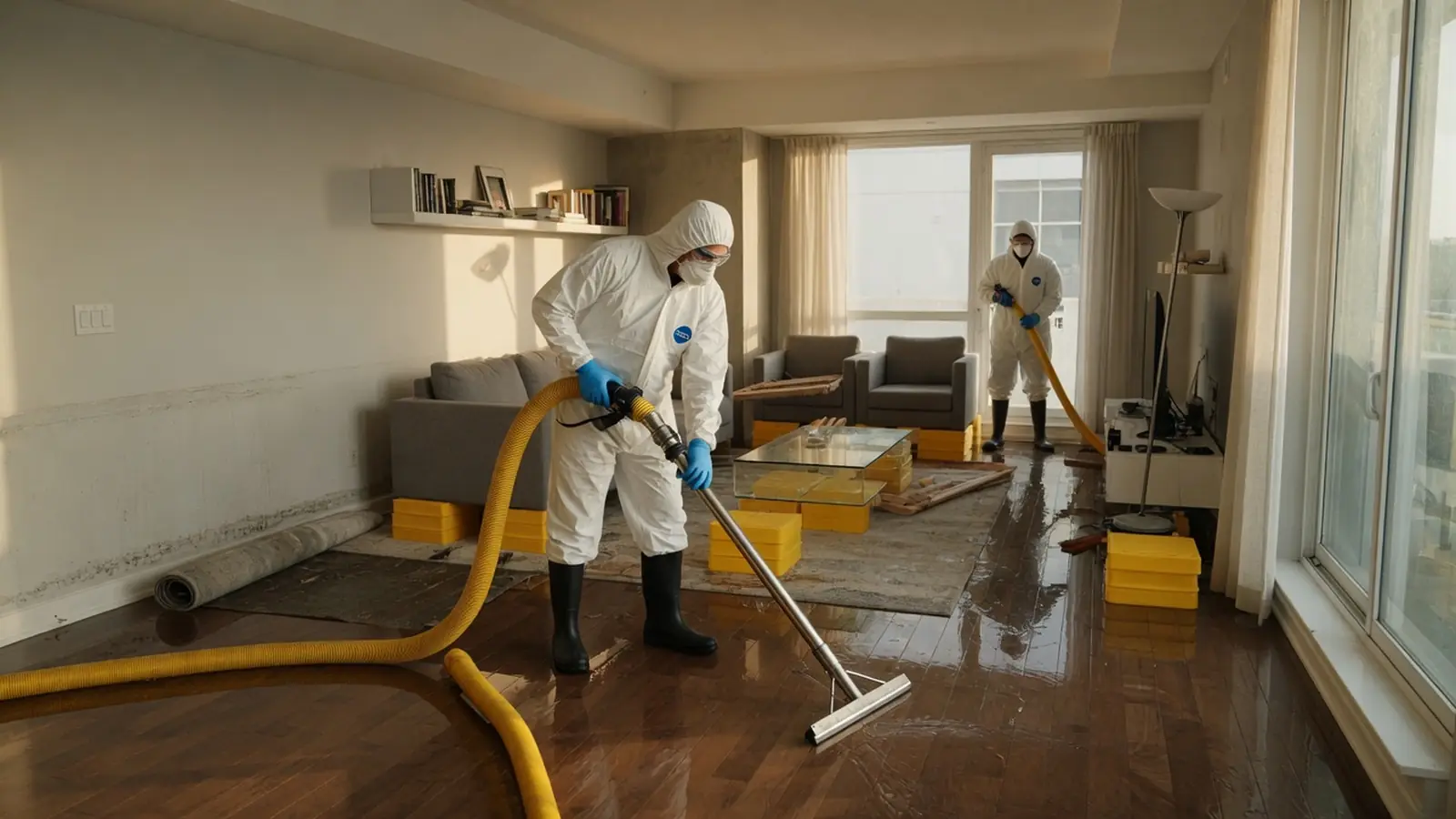
Residential Water Damage Restoration Pasadena TX
Standing water and hidden moisture can compromise your property within hours of an indoor flood or roof failure. Immediate roof tarping and window board-up are critical first steps during storm damage mitigation to prevent secondary water intrusion while structural drying equipment runs inside. Our crew acts fast to extract standing water, dehumidify subfloors, and protect your living space.
If water is pouring in, call (713) 555-0129.
Prefer to talk? (713) 555-0129
Dedicated Property Recovery And Structural Drying
Across our regional service area, about 24% of housing units (12,912 of 54,495) were built before 1960, the era of galvanized steel supply lines and cast iron drains.
Additionally, about 15% of housing units (8,305 of 54,495) were built in the 1960s, overlapping the years aluminium branch wiring was installed.
Another 34% of housing units in the local building stock (18,454 of 54,495) were built in the 1970s and 1980s, overlapping the years polybutylene supply piping was commonly installed.
Furthermore, about 73% of housing units in the community (39,671 of 54,495) were built before 1980, the period when asbestos-containing materials and lead paint were still in use.
Homeowners often describe the sudden stress when an accidental indoor plumbing break saturates finished rooms and subfloors without warning.
If you need rapid indoor flood cleanup after an emergency pipe rupture, our technicians arrive equipped with commercial extraction units.
Our Proven Water Mitigation Process
A pattern echoed in public discussions is how a suspected broken pipe beneath a concrete slab causes buckling floorboards, leaving residents unsure whether to call leak detection or a mitigation crew first. We eliminate that confusion by systematically inspecting, extracting, drying, and sanitizing every affected layer.
- Damage Assessment And Moisture Mapping. We inspect every structural component with non-invasive thermal imaging and calibrated moisture meters. The single most extensive soil unit mapped around our immediate service sector is Clodine-Urban land complex, 0 to 1 percent slopes, covering about 94,084 acres of TX201, which retains groundwater around foundations.
- Water Extraction And Containment. Our team removes pooled moisture immediately using heavy-duty truck-mounted vacuum systems. Setting up containment barriers stops moisture migration into unaffected living spaces while preserving air quality.
- Structural Drying And Dehumidification. We deploy industrial air movers and desiccant dehumidifiers to draw bound moisture out of framing and drywall. The dominant mapped soils in the surrounding territory (TX201) by acreage are Clodine-Urban land complex, 0 to 1 percent slopes; Lake Charles clay, 0 to 1 percent slopes; Wockley-Urban land complex; Cyfair-Urban land complex, 0 to 1 percent slopes, creating high ambient ground humidity that requires controlled drying.
- Sanitization And Final Moisture Verification. Every surface is treated with antimicrobial botanical washes to stop fungal growth before rebuilding. We verify all framing reaches dry baseline standards before signing off.
Precision Standards And Honest Work
A common frustration shared in public insurance forums involves contractors overbilling for drying equipment and leaving homeowners stuck in coverage disputes. Our team documents every psychrometric reading with daily moisture logs to justify mitigation equipment under standard insurance guidelines. You can learn how we handle severe storm damage mitigation with complete transparency and certified drying protocols. Because tropical storm systems passing near our coastal region often force wind-driven rain behind exterior brick veneer and siding, saturating wall cavities without immediate surface staining, our moisture meters verify hidden dampness before equipment is demobilized.
Emergency Water Extraction
When indoor supply lines break or appliances fail, rapid pumping prevents standing water from warping floorboards and saturating sill plates. Our industrial extraction units pull moisture from carpet padding and subflooring before irreversible delamination occurs.
Storm And Roof Leak Mitigation
Severe weather frequently punctures roof decking and compromised flashing across our district. NOAA radar recorded 1,585 hail signatures within about 15 miles of the local area between 2021-2025 (2021: 131, 2022: 121, 2023: 339, 2024: 604, 2025: 390). The heaviest recent hail year around the vicinity was 2024, with 604 radar hail signatures inside a 15-mile radius, leaving many roofs vulnerable to heavy wind-driven leaks.
Cavity And Structural Drying
Water trapped behind drywall and beneath baseboards leads to structural decay if not addressed with directed airflow. We inject warm dry air into wall assemblies, saving sheetrock and insulation from unnecessary tear-out.
Our Commitment To Property Preservation
We treat every water loss with urgent attention, arriving on site with specialized commercial restoration equipment to stabilize your residence and prevent secondary damage.
- 8Zip Codes Served
- 4Service Areas
- 3Services Offered
Here is genuine feedback from local homeowners who relied on our emergency mitigation and drying services when water threatened their properties.
“The first company we hired pulled out our baseboards and left noisy dehumidifiers running without ever checking the moisture inside our wall cavities. When this crew took over, they found hidden dampness behind the drywall and dried the framing completely within two days. Their thorough approach saved our kitchen from developing serious rot.”
Marcus B.
“After a busted supply line under my vanity flooded two bedrooms, the team arrived quickly and had commercial extractors running in no time. I was so impressed with their professionalism that I already gave their number to my neighbor down the street when her water heater ruptured. Finding reliable tradespeople who answer the phone immediately is rare.”
Elena R.
“While drying out our living room floorboards, the technicians discovered an active pinhole leak inside the copper wall line that was still trickling. They paused, helped me isolate the valve right away, and adjusted their drying layout without charging any surprise fees. It was a huge relief to have calm professionals solving the real problem.”
David K.
“Our home was scheduled for a final buyer inspection on Friday morning when a supply hose failed on Wednesday and soaked the hallway. The crew worked around the clock with desiccant dehumidifiers to hit moisture targets right on schedule. The inspector passed the house without a single moisture flag, keeping our sale intact.”
Sarah T.
Frequently Asked Questions
Can storm damage cause structural water damage inside walls even if ceilings and baseboards appear dry to the touch?
Yes, wind-driven rain can penetrate outer veneers and soak wall studs while interior drywall and baseboards remain completely dry to touch. Moisture migrates downward inside framing cavities, where trapped humidity creates mold colonies long before showing external water rings. Professional thermal imaging and probe meters are necessary to locate hidden moisture.
How long does the structural drying process typically take for a flooded home?
Structural drying typically takes between three to five days depending on water volume, affected materials, and regional ambient humidity levels. Dense hardwoods, multi-layered subfloors, and plaster walls may require specialized desiccant dehumidifiers or heat drying systems that extend drying times slightly.
Does homeowner insurance cover residential water damage restoration costs?
Standard policies cover sudden and accidental water discharges, such as burst plumbing pipes, but typically exclude unaddressed ongoing leaks. Our technicians document moisture readings and psychrometric logs daily to support your claim directly with your insurance adjuster.
Can carpet and subflooring be saved after an indoor plumbing flood?
Clean water floods allow carpet and subflooring to be restored if commercial extraction and rapid dehumidification begin within twenty-four hours. However, water containing sewage contaminants or saturation lasting more than 48 hours requires carpet pad removal and antimicrobial treatment of the underlying slab or plywood.
What immediate steps should a homeowner take before the restoration crew arrives?
Immediately shut off your main water valve, turn off electricity to flooded areas, and document visible water levels with clear photographs. Avoid operating household vacuum cleaners on wet carpets, and move light furniture off damp floors to prevent wood stain transfer.