
Pasadena Mold Remediation
When moisture breaches indoor building materials, rapid containment is critical to protect your living space. Our team sets up negative air controls and eliminates colonies at the source without spreading spores.
Call (713) 555-0129 with questions.
Prefer to talk? (713) 555-0129
Restoring Clean Air And Sound Structures
Our persistent coastal humidity allows active mold colonies to colonize damp building materials within 24 to 48 hours following an unresolved water intrusion.
In trade discussions, professionals emphasize that active mold spores begin colonizing damp drywall and organic building materials within a 24 to 48 hour window after water intrusion.
The median owner-occupied home across this area was built in 1975 (Census ACS 5-year), meaning many wall cavities harbor decades of aging building materials.
This community has 54,495 housing units on record in the Census ACS 5-year estimates, where concealed pipe leaks can go undetected behind vintage plaster and sheetrock.
About 14% of housing units in the area (7,738 of 54,495) were built since 2000, so a substantial share of the local stock is still on its original systems.
As homeowners often describe following indoor plumbing failures, unseen water quickly saturates subfloors before surface staining even appears.
If plumbing failures soak your property, schedule residential water damage extraction to dry building framing before spores multiply.
Our certified technicians isolate affected zones with physical barriers and run industrial scrubbers to ensure indoor air remains clean throughout treatment.
Our Remediation And Containment Sequence
A pattern echoed in public discussions is that roof storm leaks saturate ceiling drywall rapidly, requiring immediate mitigation rather than waiting for insurance claims. Severe coastal squalls frequently compromise flashing, so we coordinate emergency storm damage water removal to halt moisture migration before setting containment.
- Inspection And Moisture Mapping. We pinpoint hidden dampness behind baseboards and wall cavities using specialized diagnostics. Declaring a structure dry requires thermal imaging and calibrated RF or pin-type moisture meters against baseline data rather than surface touch.
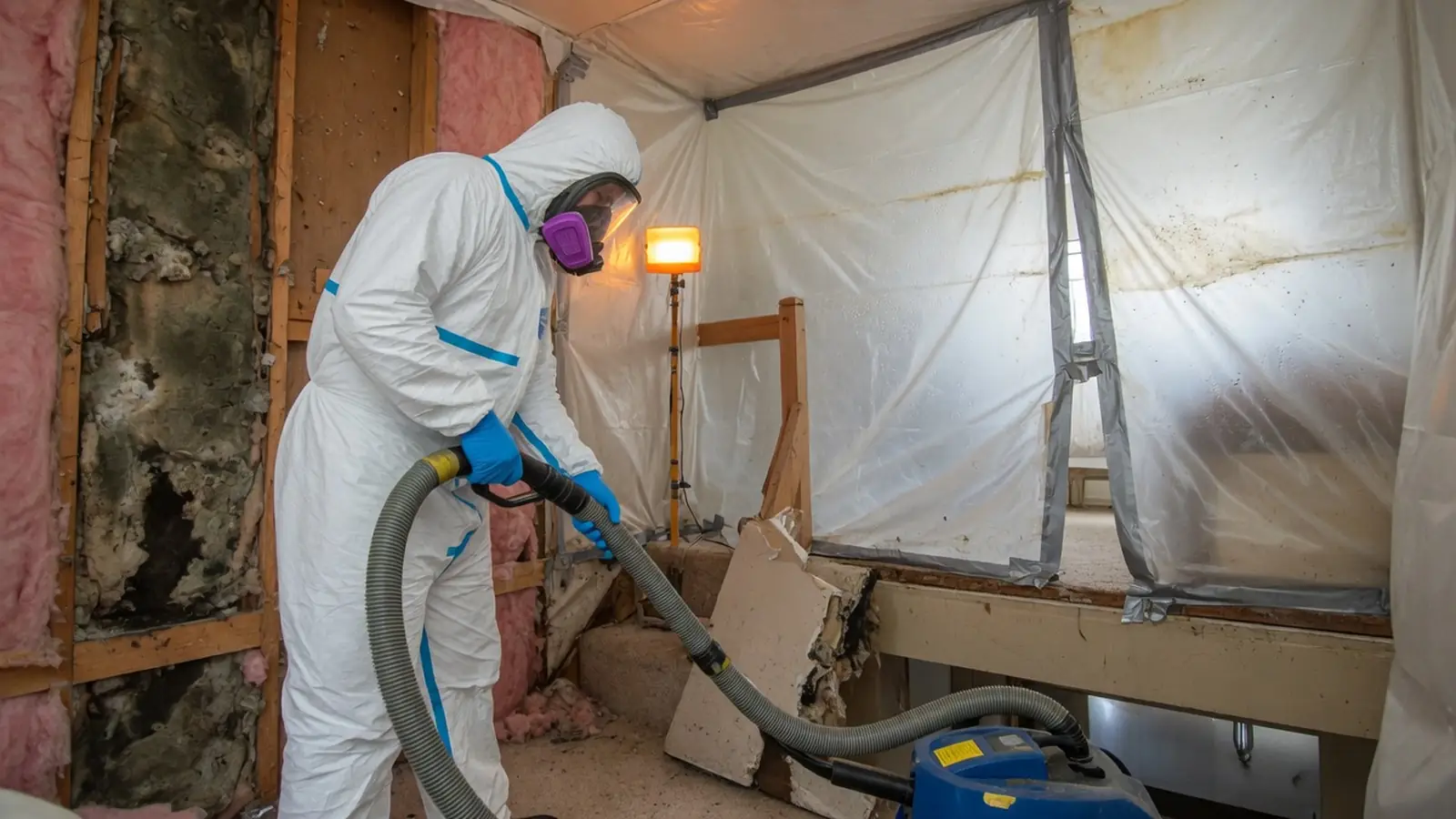
- Physical Isolation And Negative Air. Certified mold remediation requires establishing physical polyethylene containment zones under negative air pressure to prevent airborne spores from cross-contaminating unaffected living areas. Heavy-duty zippered portals and HEPA filtration keep undisturbed living spaces protected.
- Source Removal And HEPA Vacuuming. Technicians surgically excise non-salvageable drywall, scrub structural framing with specialized antimicrobial agents, and capture microscopic debris using multi-stage HEPA filtration units.
- Structural Drying And Clearance Verification. Our crew runs commercial desiccant dehumidifiers until framing timbers match verified baseline equilibrium data. Final checks confirm particulate levels inside containment return to clean ambient benchmarks.
Science-Based Remediation Protocols
When rising waters inundate low-lying ground, our dedicated flood cleanup protocols remove contaminated residue before antimicrobial treatment begins. We follow strict remediation guidelines to guarantee structural framing is completely dried and sanitized without shortcuts. Every project includes comprehensive baseline moisture readings, photographic documentation, and continuous negative air filtration to safeguard your home.
Crawlspace And Attic Remediation
We isolate and remediate fungal growth in confined attics and crawlspaces using negative air scrubbers. Contaminated insulation is bagged safely, and exposed joists receive deep antimicrobial scrubdowns.
Drywall And Structural Framing Treatment
Porous wallboard compromised by water intrusion is surgically removed along clean lines. Structural studs are abraded, treated with commercial antimicrobials, and dried to verified baselines.
HVAC And Air Duct Decontamination
Spore colonies circulating inside air handling systems degrade indoor air quality across every room. We seal duct branches, scrub supply plenums, and sanitize system coils using EPA-registered agents.
Our Commitment To Quality Remediation
We approach every property with strict containment protocols and certified diagnostics to protect structural integrity and occupant health.
- 10Zip Codes Served
- 4Service Areas
- 3Services Offered
Local property owners rely on our meticulous containment and spore elimination methods. Here is how homeowners describe their experience working with our remediation crew.
“A prior remediation outfit ripped out bathroom sheetrock without putting up plastic barriers, sending dust across our entire hallway. The crew stepped in, sealed the area under proper negative air pressure, and thoroughly sanitized every exposed stud. They fixed the previous mess completely and gave us total peace of mind.”
Marcus R.
“Getting an upfront quote that actually matched the final invoice was a huge relief after discovering mold behind our laundry wall. This company broke down every cost for containment, filtration, and disposal before touching a single tool. There was never an unexpected fee or surprise change order when the job finished.”
Elena V.
“Every single evening before heading out, the team vacuumed our walkways and taped down all containment seams so no debris escaped into the bedrooms. We never had to step around loose equipment or stray trash while living through the remediation. Their daily respect for our living space made a stressful week manageable.”
David K.
“Photos and meter readings were texted to my phone every afternoon showing the exact moisture drops inside the wall framing. I never had to chase anyone down for an update or wonder what stage of remediation was underway. The crew kept us informed every single morning and afternoon.”
Sarah T.
Frequently Asked Questions
Why is household bleach ineffective for eliminating active mold growth rooted inside porous drywall and structural framing?
Household bleach cannot penetrate porous substrates to kill embedded fungal roots, sanitizing only the surface while water feeds internal growth. Bleach contains roughly ninety percent water, which soaks into drywall and wood studs after chlorine evaporates, creating ideal moisture conditions for recurring growth.
How long does professional mold remediation typically take?
Professional mold remediation projects typically require between two and five days depending on structural moisture levels and total area. Setting up negative air barriers takes several hours, while physical removal, antimicrobial scrubbing, and thorough mechanical dehumidification require multiple days to hit dry baselines.
Can I stay inside my home while mold remediation is being performed?
Homeowners can generally remain in unaffected areas if containment plastic and negative air machines properly isolate the remediation zone. For severe contamination covering major living zones or HVAC ducts, temporary relocation may be recommended while air scrubbers run.
How do technicians verify that all mold spores are successfully eliminated?
Technicians confirm spore eradication by matching moisture meter readings against baseline data alongside thorough visual checks under bright light. Calibrated thermal imaging cameras and pin probes verify that framing reaches dry standard equilibrium before containment plastic comes down.
Does homeowner insurance cover the cost of mold remediation?
Homeowner insurance policies typically cover mold remediation when fungal growth stems directly from a sudden and accidental covered water loss. Slow, chronic leaks or maintenance neglect are frequently excluded, making immediate documentation and swift professional mitigation essential.